Korean Medical & Hospital Record Translation
We translate Korean medical and hospital records with a focus on accuracy, consistency, and reviewer-friendly English. Our translations are used in South Korea, the United States, and Canada, supporting insurance claims and appeals (including denials), utilization review, internal audits, and other medical documentation workflows.
Korean clinical records can be especially challenging because they are rarely “pure Korean.” A single chart may include Korean narrative text alongside English terms, abbreviations, acronyms, hospital templates, occasional Hanja, and handwritten entries. Nursing notes and older hospital software sometimes use non-standard spacing, legacy phrasing, and shorthand that can be difficult to interpret without experience in Korean charting conventions.
Clinical context also matters. Inpatient documentation may reflect Korean hospital routines that differ from what Western reviewers expect, for example, guardian (caregiver) presence, ward practices, and how daily care is recorded, so we translate not only the words, but the intended meaning within the clinical workflow.
Medication terminology is another common pitfall: Korean product names often differ from overseas brand names. When the active ingredient is clearly identifiable, we can add it in brackets to reduce confusion and improve clarity for claims reviewers and clinicians. Our process is shaped by hands-on experience and continuous refinement based on practical feedback from healthcare and insurance stakeholders.
See the work: a Korean nursing assessment form, recreated in English
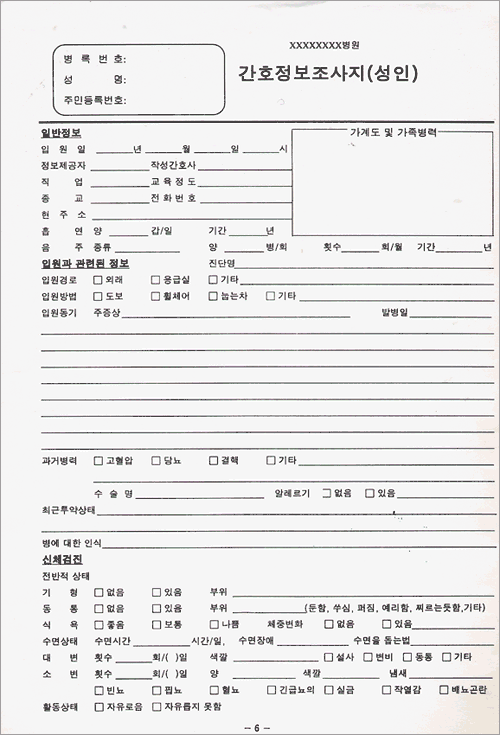
Below is a blank nursing information survey (간호정보조사지) of the kind found at the front of most Korean inpatient charts, shown beside our complete English recreation. The translation is rebuilt field for field to mirror the original layout, so a claims reviewer can hold the two documents side by side and find every entry in the same place. No patient information appears in this sample.
Name:
Resident registration number:
XXXXXXXX Hospital
Nursing Information Survey (Adult)
General Information
Admission Date Year Month Day Hour
Informant Nurse Completing Form
Occupation Level of Education
Religion Telephone Number
Current Address
Smoking Amount packs/day Duration years
Drinking Type Amount bottles/occasion Frequency times/month Duration years
Admission-Related Information
Diagnosis
Route of Admission Outpatient Department Emergency Room Other
Method of Admission Ambulatory Wheelchair Stretcher Other
Reason for Admission Chief Complaint Date of Onset
Past Medical History Hypertension Diabetes Tuberculosis Other
Surgery Name Allergies None Yes
Recent Medication Status
Awareness of Illness
Physical Examination
General Condition
Deformity None Yes Site
Pain None Yes Site (Dull, Shooting, Radiating, Sharp, Stabbing, Other)
Appetite Good Fair Poor Weight Change None Yes
Sleep Status Sleep Duration hours/day, Sleep Disturbances Sleep Aids
Bowel Movements Frequency times/( ) days Color Diarrhea Constipation Pain Other
Urination Frequency times/( ) days Amount Color Odor
Frequency Oliguria Hematuria Urgency Incontinence Burning Sensation Dysuria
Activity Status Unrestricted Restricted
- 6 -
Forms like this one show why experience with Korean charting conventions matters. Pain descriptors such as 둔함, 쑤심, and 찌르는듯함 have no single dictionary equivalent, and the surrounding chart mixes Korean narrative, English abbreviations, and hospital shorthand. Every translation is certified and signed by the same CTTIC-certified translator who performed it.
원문 보기 (View the Korean source text)
XXXXXXXX병원 간호정보조사지(성인). 병록번호, 성명, 주민등록번호.
일반정보. 입원일 년 월 일 시. 정보제공자, 작성간호사, 직업, 교육정도, 종교, 전화번호, 현주소. 흡연: 양 갑/일, 기간 년. 음주: 종류, 양 병/회, 횟수 회/월, 기간 년. 가계도 및 가족병력.
입원과 관련된 정보. 진단명. 입원경로: □ 외래 □ 응급실 □ 기타. 입원방법: □ 도보 □ 휠체어 □ 눕는차 □ 기타. 입원동기: 주증상, 발병일.
과거병력: □ 고혈압 □ 당뇨 □ 결핵 □ 기타. 수술명. 알레르기: □ 없음 □ 있음. 최근투약상태. 병에 대한 인식.
신체검진. 전반적 상태. 기형: □ 없음 □ 있음, 부위. 동통: □ 없음 □ 있음, 부위 (둔함, 쑤심, 퍼짐, 예리함, 찌르는듯함, 기타). 식욕: □ 좋음 □ 보통 □ 나쁨. 체중변화: □ 없음 □ 있음. 수면상태: 수면시간 시간/일, 수면장애, 수면을 돕는법.
대변: 횟수 회/일, 색깔, □ 설사 □ 변비 □ 동통 □ 기타. 소변: 횟수 회/일, 양, 색깔, 냄새, □ 빈뇨 □ 핍뇨 □ 혈뇨 □ 긴급뇨의 □ 실금 □ 작열감 □ 배뇨곤란. 활동상태: □ 자유로움 □ 자유롭지 못함.
A Korean discharge nursing care plan, recreated in English
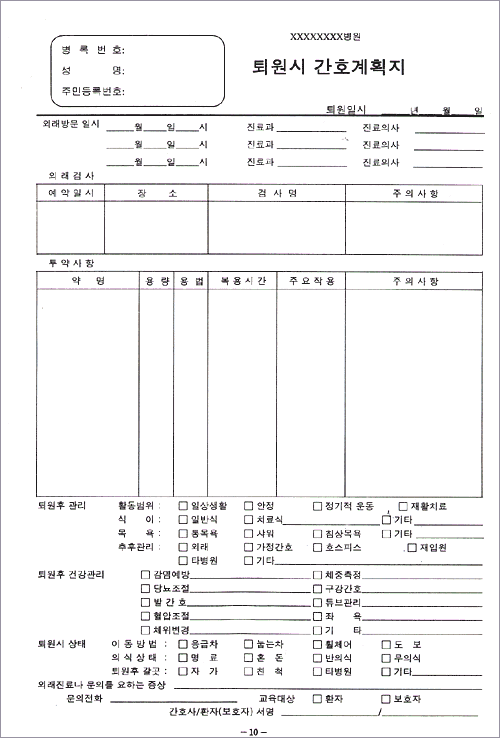
A discharge nursing care plan (퇴원시 간호계획지) records outpatient follow-up appointments, discharge medications, and post-discharge care instructions. Insurance reviewers rely on it to confirm what care was ordered after a hospital stay, so the table structure is preserved exactly.
Name:
Resident registration number:
XXXXXXXX Hospital
Discharge Nursing Care Plan
Discharge Date/Time Year Month Day
Outpatient Visit Date/Time Month Day Hour Department Consulting Physician
Month Day Hour Department Consulting Physician
Month Day Hour Department Consulting Physician
Outpatient Tests
| Appointment Date/Time | Location | Test Name | Precautions |
|---|---|---|---|
Medication Information
| Drug Name | Dose | Directions | Time of Administration | Main Effects | Precautions |
|---|---|---|---|---|---|
Post-Discharge Care
Activity Level: Daily Activities Rest Regular Exercise Rehabilitation Therapy
Diet: Regular Diet Therapeutic Diet Other
Bathing: Tub Bath Shower Bed Bath Other
Follow-up Care: Outpatient Department Home Care Hospice Readmission
Other Hospital Other
Post-Discharge Health Care
Infection Prevention Weight Measurement
Diabetes Control Oral Care
Foot Care Tube Management
Blood Pressure Control Sitz Bath
Position Change Other
Condition at Discharge
Method of Transfer: Ambulance Stretcher Wheelchair Ambulatory
Level of Consciousness: Alert Confused Semiconscious Unconscious
Destination After Discharge: Home Relative's Home Other Hospital Other
Symptoms Requiring Outpatient Consultation or Inquiry
Inquiry Telephone Number Education Recipient Patient Guardian
Nurse/Patient (Guardian) Signature /
- 10 -
원문 보기 (View the Korean source text)
XXXXXXXX병원 퇴원시 간호계획지. 병록번호, 성명, 주민등록번호. 퇴원일시 년 월 일.
외래방문 일시: 월 일 시, 진료과, 진료의사.
의뢰검사: 예약일시, 장소, 검사명, 주의사항.
투약사항: 약명, 용량, 용법, 복용시간, 주요작용, 주의사항.
퇴원후 관리. 활동범위: □ 일상생활 □ 안정 □ 정기적 운동 □ 재활치료. 식이: □ 일반식 □ 치료식 □ 기타. 목욕: □ 통목욕 □ 샤워 □ 침상목욕 □ 기타. 추후관리: □ 외래 □ 가정간호 □ 호스피스 □ 재입원 □ 타병원 □ 기타.
퇴원후 건강관리: □ 감염예방 □ 체중측정 □ 당뇨조절 □ 구강간호 □ 발간호 □ 튜브관리 □ 혈압조절 □ 좌욕 □ 체위변경 □ 기타.
퇴원시 상태. 이동방법: □ 응급차 □ 눕는차 □ 휠체어 □ 도보. 의식상태: □ 명료 □ 혼돈 □ 반의식 □ 무의식. 퇴원후 갈곳: □ 자가 □ 친척 □ 타병원 □ 기타.
외래진료나 문의를 요하는 증상. 문의전화. 교육대상: □ 환자 □ 보호자. 간호사/환자(보호자) 서명.
Korean Medical Devices 의료기기
- Korean medical device import and export documents 의료기기
- Medical device manuals 의료기기 설명서
- Medical device safety information 의료기기 안전 정보
- Medical device patents 의료기기 특허 출원
Korean Hospital, Surgery & Treatment Records 외래/수술 진료 기록
- Proof of vaccination
- Korean patient records 의무기록
- Physician findings 의사소견서
- Discharge reports 퇴원서, 퇴원 계획서
- Receipts and tax forms issued by Korean health care providers 의료진료비 납부내역서, 영수증, 세금신고서
Korean Pharmaceutical & Clinical Trials
- Study protocols 임상시험 계획서
- Informed consent forms (ICF) 연구대상자 동의서 및 설명문
- Adverse event reports 중대한 이상반응 보고
- Common technical documents 기술 문서
- Institutional Review Board (IRB) / Ethics Committee Letters 임상시험심사위원회 문서
- Investigator's Brochures (IB)
- Patient brochures and diaries 연구대상자 설명서 및 일지
- Investigational medicinal product dossiers (IMPD)
- Pharmaceutical product manuals, legislation, and regulations
Korean Medical Field Documents
- Geriatric
- Psychiatric 정신과 문서
- Internal medicine 내과 문서
- Neurology 신경과 문서
- Language-speech pathology 언어치료 문서
Questions? Get in Touch.
We are ready to help you with your unique Korean to English translation needs.